
electronics · Articles
Backup Power for a House
Backup Power for a House
 Transact Shopping
HOME · UNITED STATES
Backup Power for a House
What you actually need to run, sizing a system, connection and safety
Backup power for a home is a sizing exercise, and most disappointment comes from expecting a battery to run things that draw enormous current.
Decide what must stay on
In most outages the essentials are a fridge or freezer, lighting, phone charging, the internet router and any medical equipment. Together those are a modest load.
Heating, cooking, kettles, immersion heaters and electric showers draw enormous power and are not realistic on a portable system.
Work in watt hours
Multiply each device's wattage by the hours you need it. A fridge cycles rather than running continuously, so its daily consumption is far less than its rated wattage suggests — check the annual figure on the energy label.
Add the total and buy capacity with headroom, since usable capacity is lower than the rated figure.
Surge matters as much as capacity
Anything with a motor or a compressor draws several times its running wattage at startup. A fridge rated at 150 watts may need over a thousand momentarily.
Check the surge rating separately from the continuous output.
Connection
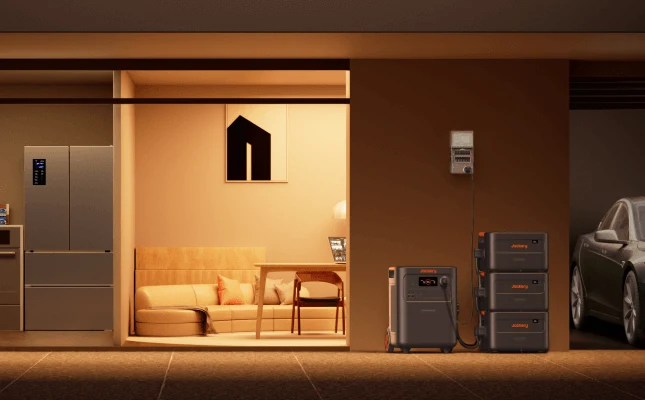
Plugging appliances directly into the unit is simple and safe. Connecting a battery or generator into house wiring requires a transfer switch installed by a qualified electrician, since back-feeding a supply can kill someone working on the network.
Recharging
Mains when power returns, solar during an extended outage, or a vehicle. Work out how long a full recharge takes, since that determines whether the system sustains a multi-day outage.
During an outage
Keep the freezer closed, since a full one holds temperature for around a day or two. Charge phones and power banks first, and run the router only when you need it.
Keep a wind-up or battery radio, a torch per person and some cash, since card payments will not work.
Testing it
Run the system once a year on the things you intend to power, so you find the problems in daylight rather than during an outage. Charge the battery every few months if unused.
Who needs to plan more
Anyone depending on powered medical equipment, refrigerated medication or a stairlift should speak to their supplier and their electricity network operator in advance.
Most networks keep a priority services register for households with additional needs, which is free to join and is worth doing well before you need it.
Safety
Never run a fuel generator indoors, in a garage or near a window. Carbon monoxide has no smell and kills people every year.
Keep batteries ventilated, on a hard surface, and charged to around half if stored unused for months.
WHERE TO BUY
Ready to shop Jackery? Use the link below to visit the official store.
→ Shop Jackery — official site
Visit this site