
electronics · Articles
3D Scanning for Home and Small Workshops
3D Scanning for Home and Small Workshops
 Transact Shopping
TECH · GLOBAL
3D Scanning for Home and Small Workshops
How scanners work, what they suit, preparing objects and the software side
Desktop 3D scanners have become affordable, and what they are good at is narrower and more useful than the marketing implies.
How they work
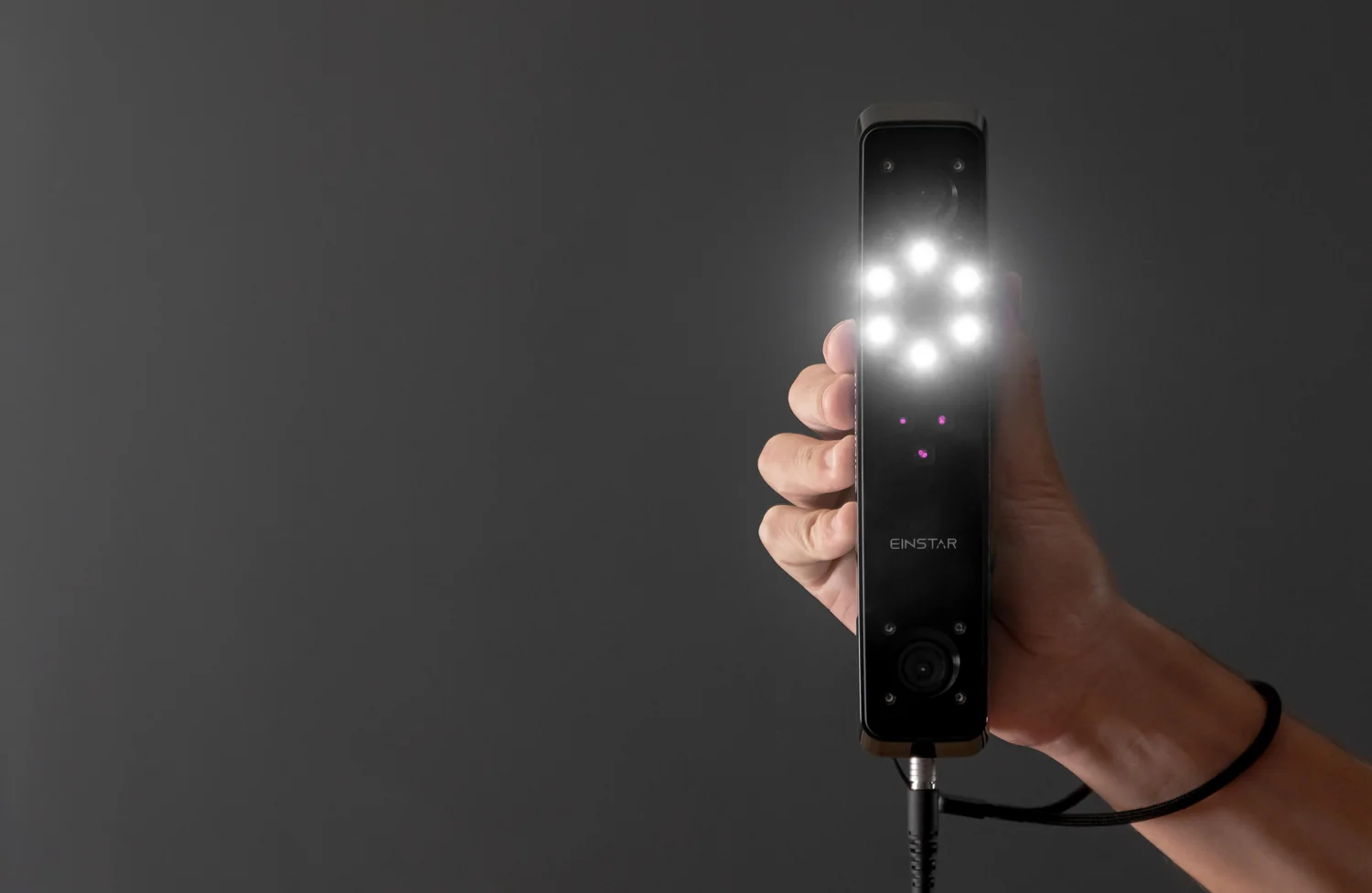
Most use structured light or lasers to measure a surface from many angles, building a point cloud that becomes a mesh. Accuracy is quoted in fractions of a millimetre and depends heavily on conditions.
Photogrammetry, which builds a model from ordinary photographs, costs nothing but time and suits large objects and buildings.
What they suit
Reverse engineering a bracket that must fit an existing part, capturing an organic shape that would be tedious to model, archiving objects, and scanning a body or a face for custom fitting.
They are poor at shiny, transparent, black and very fine detailed surfaces, which is the main practical limitation.
Preparing an object
Matt surfaces scan best. A removable scanning spray dulls shiny parts, and markers help the software align passes on featureless shapes.
Even diffuse lighting, a turntable and a stable object make far more difference than the scanner's headline accuracy.
The software is most of the work
Raw scans need aligning, cleaning, hole filling and decimating before they are usable, and a mesh is not a CAD model. Converting to editable geometry is a separate and considerable job.
Computer requirements
Scanning is demanding on memory and graphics. Check the stated requirements honestly before buying.
Printing what you scan
Check the mesh is watertight before slicing. Scan, repair, then print is the usual workflow.
Alternatives
Callipers and a modelling package handle simple mechanical parts faster than scanning does. Photogrammetry from a phone costs nothing and suits larger objects.
Scanning services exist for one-off jobs, which is frequently cheaper than buying a scanner.
Storage and files
Scan files are large. Keep the raw data as well as the cleaned mesh, since cleaning is destructive and you may want to redo it.
Where scanning pays
Replacing a discontinued part, fitting something to an irregular surface, or capturing an object before modifying it. In each case the scan saves hours of measuring and guessing.
For anything that must fit precisely, verify critical dimensions with callipers rather than trusting the scan alone.
Learning
Expect a few weeks before results are usable. Start with small matt objects on a turntable rather than a car or a room.
Check what file formats a scanner exports before buying, since a closed format limits what you can do next.
Budget for the software alongside the hardware, since some scanners require a subscription.
Copyright
Scanning an object does not give you the right to reproduce or sell copies of someone else's design.
WHERE TO BUY
Ready to shop Einstar? Use the link below to visit the official store.
→ Shop Einstar — official site
Visit this site