
other · Articles
Gold Purity and What It Means for Wear
Gold Purity and What It Means for Wear
 Transact Shopping
JEWELLERY · GLOBAL
Gold Purity and What It Means for Wear
Carats explained, plated and solid, gemstone hardness and daily wear
Gold jewellery is sold by carat, and the number describes purity rather than quality. Which purity suits you depends entirely on how the piece will be worn.
What the carat means
24 carat is pure gold and too soft for jewellery. 18 carat is 75 percent gold, rich in colour and relatively soft. 14 carat is around 58 percent, harder and more scratch resistant. 9 carat is around 37 percent and hardest of all.
For a ring worn every day, 14 carat is frequently the better practical choice than 18. For earrings and pendants, softness matters far less.
Colour
Yellow, white and rose gold differ in the alloy metals used. White gold is usually rhodium plated and needs replating every few years to stay bright, since the underlying alloy is slightly yellow.
Solid, filled and plated
Solid gold is gold throughout. Gold filled has a thicker bonded layer and lasts years. Gold plated is a very thin layer that wears through with daily contact, exposing the base metal underneath.
Nickel in base metal is the usual cause of skin reactions, which is why plated pieces start causing trouble once they wear.
Hallmarks
In the UK, gold above a certain weight must be hallmarked, recording the metal and its fineness independently of the seller's claim. Look for it and ask if you cannot find one.
Gemstone hardness
Moss agate, amethyst and other quartz-family stones sit around seven and tolerate everyday wear reasonably. Opal, pearl and turquoise are considerably softer and better suited to occasional pieces.
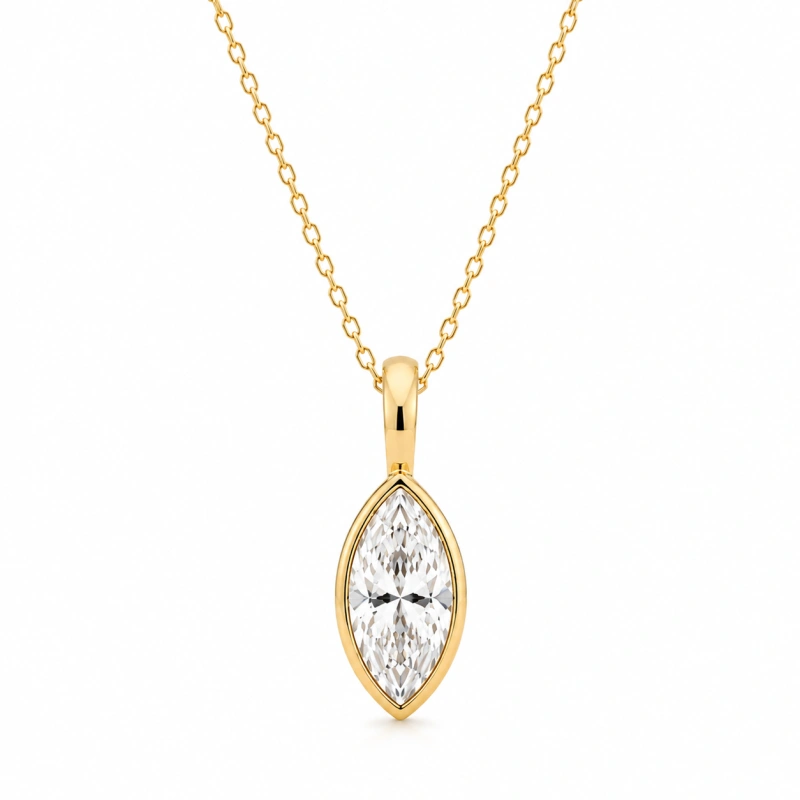
A bezel setting protects the edge of a softer stone far better than claws.
Buying online
Scale is unreliable on a screen, so check the stated dimensions in millimetres rather than judging from an enlarged photograph. Ask for a photograph on a hand or a wrist.
Ring size changes with temperature and time of day, so size at the end of a normal day and ask whether the design can be resized.
Insurance
Home contents policies cap jewellery at a low figure, so anything significant needs listing separately. Keep receipts and any certification somewhere other than with the jewellery.
Everyday wear
Put jewellery on last, after moisturiser and perfume, and take it off for swimming, showering, the gym and cleaning. Chlorine and household products both attack alloys.
Store pieces separately so harder stones do not scratch softer ones.
Repairs
Worn claws, thin bands and broken clasps are all straightforward and inexpensive to repair before they fail, which is considerably cheaper than replacing a lost stone.
Care
Warm soapy water and a soft brush. Take rings off for the gym, cleaning and gardening, and have claws checked every couple of years.
WHERE TO BUY
Ready to shop YFN? Use the link below to visit the official store.
→ Shop YFN — official site
Visit this site