
home · Articles
Wooden Wall Art and Layered Maps
Wooden Wall Art and Layered Maps
 Transact Shopping
HOME · GLOBAL
Wooden Wall Art and Layered Maps
What layered wood pieces are, sizing to a wall, fixing them and light
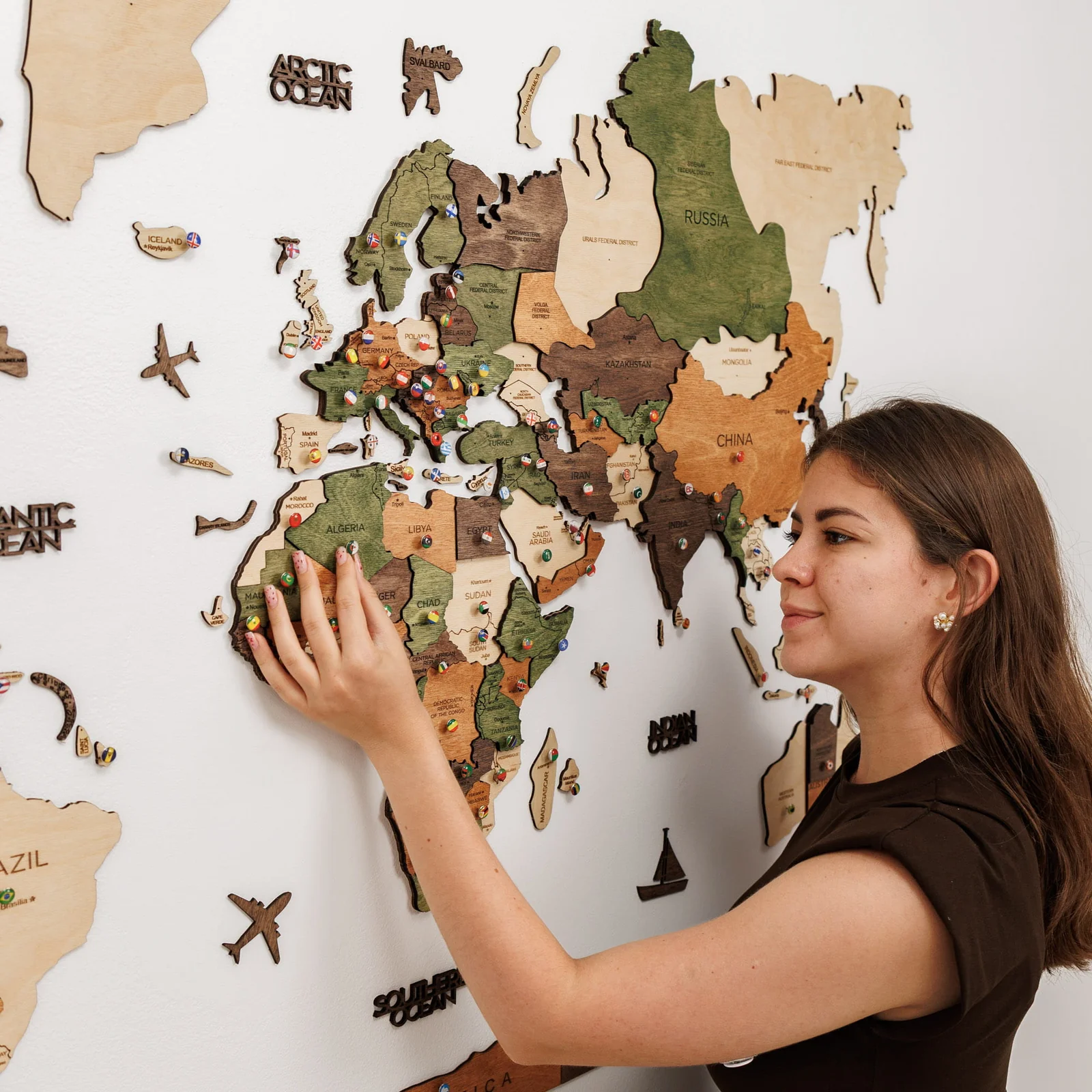
Layered wooden wall pieces are cut in sections and assembled to give depth, which is why they read differently from a print. Hanging them well is mostly about scale and fixings.
What they are
Thin plywood or veneer layers laser cut and stacked, giving a physical relief rather than a printed image. The depth catches light and casts shadow, which is the whole effect.
That also means they collect dust in the recesses and need occasional attention with a soft brush.
Size it to the wall
A common guide is that art above furniture should span two thirds to three quarters of the furniture's width. People buy these too small far more often than too large.
Cut paper to the exact dimensions and tape it up for a day before ordering. This costs nothing and prevents the wall full of filled holes.
Height
Hang so the centre sits around 145 to 150 centimetres from the floor, which is average eye level. Above a sofa, leave fifteen to twenty-five centimetres between the furniture and the bottom edge.
Fixing
These are lighter than framed glass and frequently wider, which means several fixing points rather than one. Check the wall construction and use proper hollow-wall anchors in plasterboard.
Use a long level across the whole piece rather than eyeballing it, since a wide piece shows even a small tilt.
Light and wood
Direct sunlight fades and darkens wood unevenly over months, so avoid a wall opposite a south-facing window. Side lighting emphasises the depth, which is worth planning for.
As a gift
Personalised wall pieces land well because they are specific — a map of where someone lives, a route they walked, a place that matters. Generic designs are admired and not kept.
Proofread every letter, name, date and coordinate before confirming, and allow several weeks for production.
Care
Dust with a dry soft brush rather than a damp cloth, since water raises the grain on unfinished wood. Check fixings occasionally on anything wide.
Hanging several pieces
Lay the arrangement out on the floor first and photograph it. Keep the gaps consistent, commonly five to eight centimetres, and treat the group as one shape when positioning it.
A unifying element — matching finishes or a consistent spacing — is what stops a wall looking accidental.
Renting
Adhesive hanging strips rated for the weight avoid drilling, and leaning a large piece on a shelf is a legitimate choice.
Humidity
Wood moves with humidity, so avoid bathrooms and directly above radiators.
Check every letter of any personalised text before confirming, since these are not returnable.
WHERE TO BUY
Ready to shop Enjoy the Wood? Use the link below to visit the official store.
→ Shop Enjoy the Wood — official site
Visit this site