
other · Articles
Wellingtons and Waterproof Boots
Wellingtons and Waterproof Boots
 Transact Shopping
OUTDOORS · GLOBAL
Wellingtons and Waterproof Boots
Materials, fit and linings, safety ratings and looking after them
Waterproof boots are simple until you buy the wrong sort, and the differences are in the material, the lining and the sole.
Rubber and PVC
Natural rubber is flexible, comfortable in cold and expensive. PVC is cheaper, stiffer and harder wearing against chemicals. Neoprene-lined boots are considerably warmer and suit standing still in cold and wet.
Rubber perishes with ultraviolet light and ozone, which is why boots left in a sunny porch crack at the ankle within a couple of years.
Fit
Wellingtons are sized generously for thick socks, and a boot that is too large causes heel lift and blisters over distance. Try them with the socks you will wear.
Adjustable gussets matter for wide or narrow calves, and a boot that will not fit over trousers is a daily annoyance.
Soles and safety ratings
Deep cleats for mud, a flatter pattern for decks and yards. For work, check the rating — S5 boots include a steel or composite toe cap and a penetration-resistant midsole, which matters around machinery and livestock.
Slip resistance ratings are marked separately and matter on wet concrete.
Warmth
Thin rubber conducts cold from the ground. A thermal insole, a neoprene lining and good socks do more than a thicker boot.
Care
Rinse mud off, dry naturally away from radiators, and store upright in the dark. Boot dryers help in constant use.
Never dry them on a heater, which is what makes rubber brittle.
Socks and insoles
Wool or technical socks rather than cotton, which holds sweat and chills. A decent insole transforms a wellington for standing all day, and removable liners can be dried separately.
Two pairs of socks rarely helps and usually makes a boot tight, which makes feet colder.
Children
Measure feet every six to eight weeks and buy to the current size, since a loose boot comes off in mud and causes trips.
Choosing by use
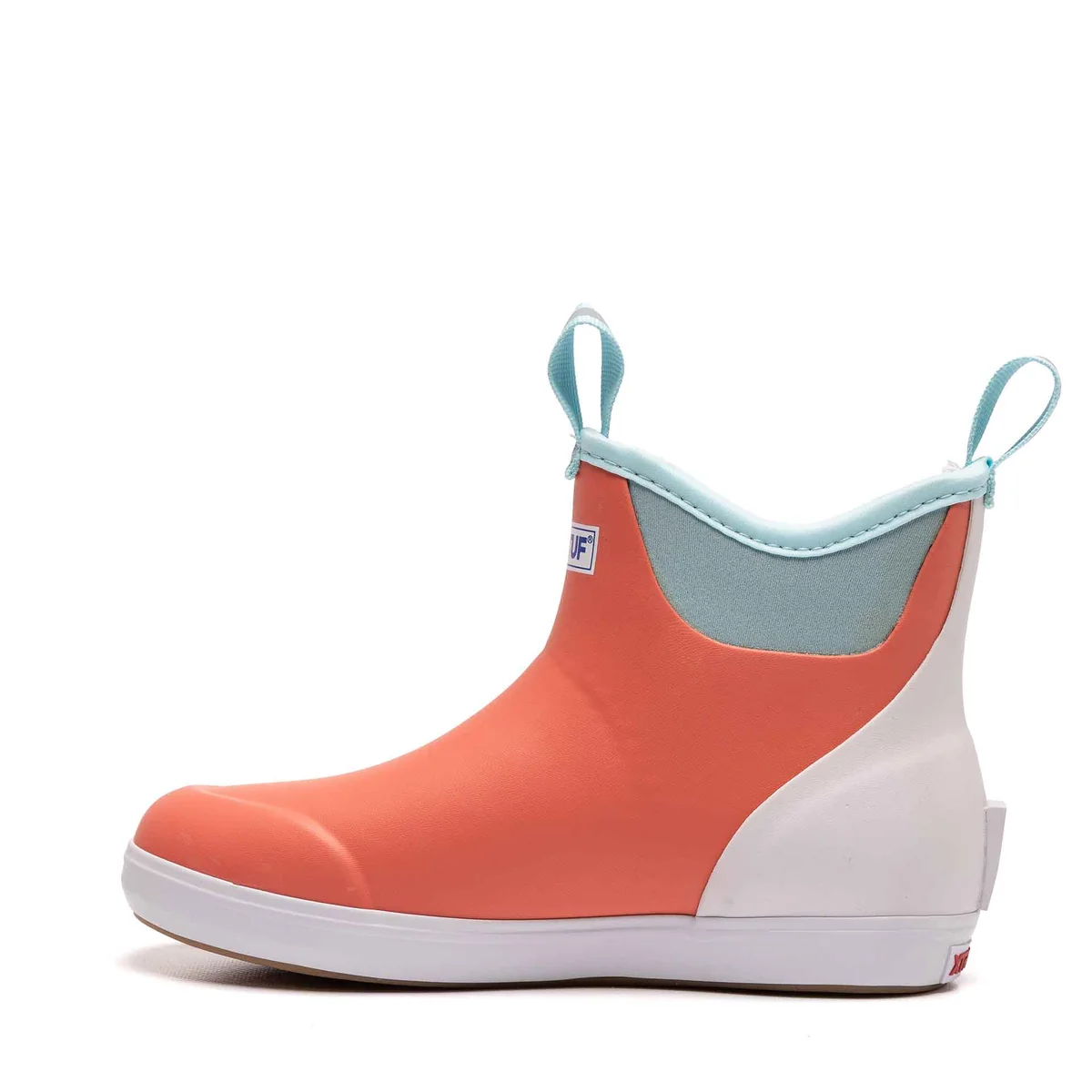
Short ankle boots suit the garden and the school run. Full-height wellingtons suit mud, livestock and flooding. Insulated boots suit standing still in cold, and are too warm for walking any distance.
Consider how easy they are to get on and off, since a boot that needs a chair gets left by the door.
Storage
Upright with boot shapers or rolled newspaper, out of sunlight and away from heat. Never store them folded, which cracks the rubber at the crease.
Check the calf circumference before ordering online, since this is the commonest return reason.
Disposal
Some manufacturers and retailers run take-back schemes for worn rubber boots.
WHERE TO BUY
Ready to shop XtraTuf? Use the link below to visit the official store.
→ Shop XtraTuf — official site
Visit this site