
kids · Articles
Eco Nappies: What the Claims Actually Mean
Eco Nappies: What the Claims Actually Mean
 Transact Shopping
FAMILY · GLOBAL
Eco Nappies: What the Claims Actually Mean
Biodegradable and compostable, bamboo, cloth alternatives and nappy rash
Nappies are bought by the thousand and the environmental claims around them are among the most loosely used in retail. Understanding the terms makes the choice clearer, whichever way you go.
Biodegradable is not the same as compostable
Biodegradable means a material breaks down eventually under some conditions. Compostable means it breaks down within a defined period in a defined facility, which is a much stronger claim.
In a landfill, where most nappies end up, conditions are anaerobic and very little breaks down regardless of the label.
Partly compostable is the usual reality
Most eco nappies use plant-based materials for part of the construction, with an absorbent core that is not compostable. A percentage figure on the pack is more informative than the word itself.
Home composting of used nappies is not advisable because of the pathogen risk, and most councils will not accept them in food waste collections.
Bamboo
Bamboo viscose is soft and absorbent and is made by chemically processing bamboo pulp, so it is a processed fibre rather than bamboo in a raw sense. Lyocell processing recovers more of the solvent and is cleaner.
Cloth nappies
The honest position is that cloth has a lower overall footprint only if washed at moderate temperatures, line dried and used across more than one child. Washing hot and tumble drying erases the advantage.
Many councils offer a voucher scheme towards cloth nappies, which is worth checking.
Cost over the nappy years
A child uses several thousand nappies before potty training. Work out the cost per nappy rather than per pack, since pack sizes vary considerably between brands and sizes.
Buy one pack before committing to a subscription, since fit varies between brands and a nappy that leaks on your baby is no saving.
Disposal
Wherever they end up, empty solids into the toilet first. Never flush wipes or nappy liners unless explicitly marked flushable, since they block drains.
Sizing and fit
Nappies are sized by weight and the ranges overlap. If a nappy leaks at the legs it is usually too big; if it leaks at the back it is usually too small or not pulled up far enough.
Run a finger around the leg cuffs after fastening to make sure they are not tucked in, which is the most common cause of leaks.
What matters day to day
Fit determines leaks more than brand. Change frequently, since prolonged contact with moisture is the main cause of nappy rash.
For nappy rash, change often, clean gently with water, allow nappy-free time and use a barrier cream. A rash that spreads, blisters or does not improve in a few days needs a doctor.
WHERE TO BUY
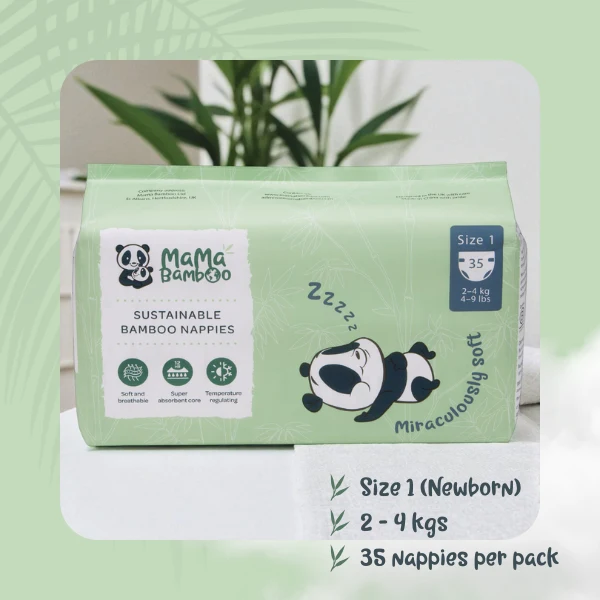
Ready to shop Mama Bamboo? Use the link below to visit the official store.
→ Shop Mama Bamboo — official site
Visit this site