
home · Articles
Hanging Large Wall Art
Hanging Large Wall Art
 Transact Shopping
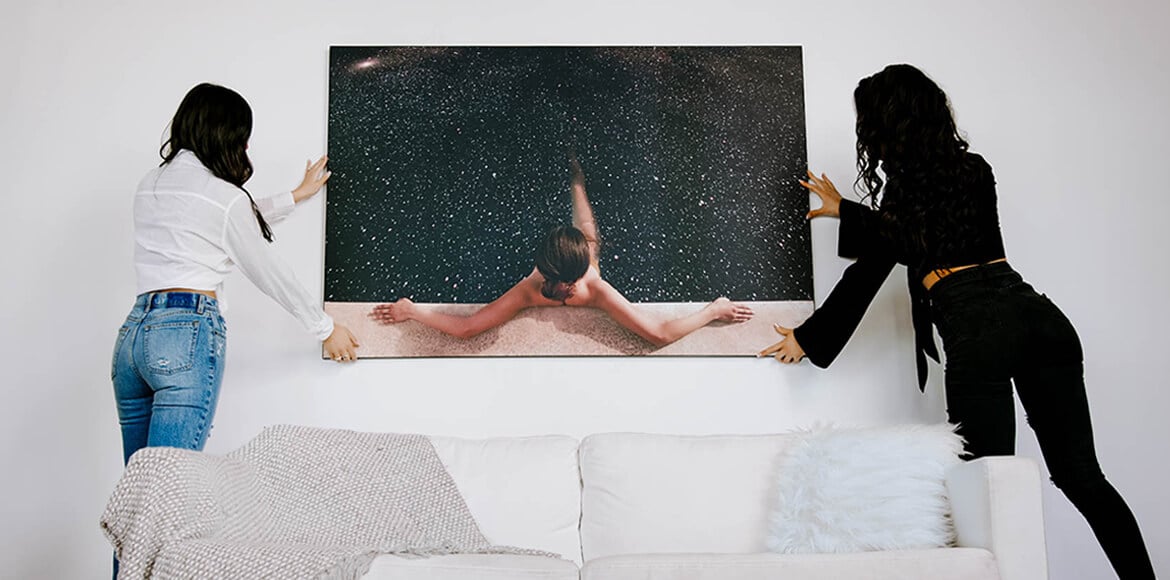
Sizing to the wall, height, fixings for weight and protecting the artwork
Large art transforms a room and is consistently hung too small and too high. Both are easy to get right with a tape measure and some paper.
Size it to the wall
A common guide is that art above furniture should span roughly two thirds to three quarters of the furniture's width. On an empty wall, aim for the piece to occupy a similar proportion of the usable space.
Most people buy too small. A single large piece reads as deliberate where several small ones read as clutter.
Height
Hang so the centre of the artwork sits at about 145 to 150 centimetres from the floor, which is average eye level and what galleries use.
Above a sofa or a sideboard, leave roughly 15 to 25 centimetres between the furniture and the bottom of the frame so they read as a group.
Test it with paper
Cut newspaper or brown paper to the exact size and tape it up. Live with it for a day before drilling. This costs nothing and prevents the wall full of filled holes.
Fixings must match the weight and the wall
Check the artwork's weight and the wall construction. Plasterboard needs proper hollow-wall anchors rather than a nail, and heavy pieces should be fixed into a stud or into masonry.
Use two fixings rather than one for anything wide, which stops it tilting and spreads the load. Check for cables and pipes before drilling.
Light
Keep artwork out of direct sunlight, which fades pigments and prints permanently. Works on paper should be behind glass, ideally with ultraviolet-filtering glazing.
Galleries of several pieces
Lay the arrangement out on the floor first and photograph it. Keep the gaps consistent, commonly five to eight centimetres, and treat the group as one shape when positioning it on the wall.
A single unifying element — matching frames, or a consistent mount colour — is what stops a gallery wall looking accidental.
Renting
Adhesive hanging strips rated for the weight avoid drilling entirely, and leaning a large piece on a shelf or the floor is a legitimate choice.
Choosing the piece
Buy something you will still want in five years rather than something matching a cushion. Art outlasts the scheme it was bought for.
Check what the print is on and whether it is framed, since thin paper in a flimsy frame looks cheap whatever the image.
Canvas and prints
Canvas is light and needs no glass. Paper prints need mounting and framing to stay flat, and acidic mounts yellow them over years.
Dust with a dry soft cloth rather than sprays.