
food · Articles
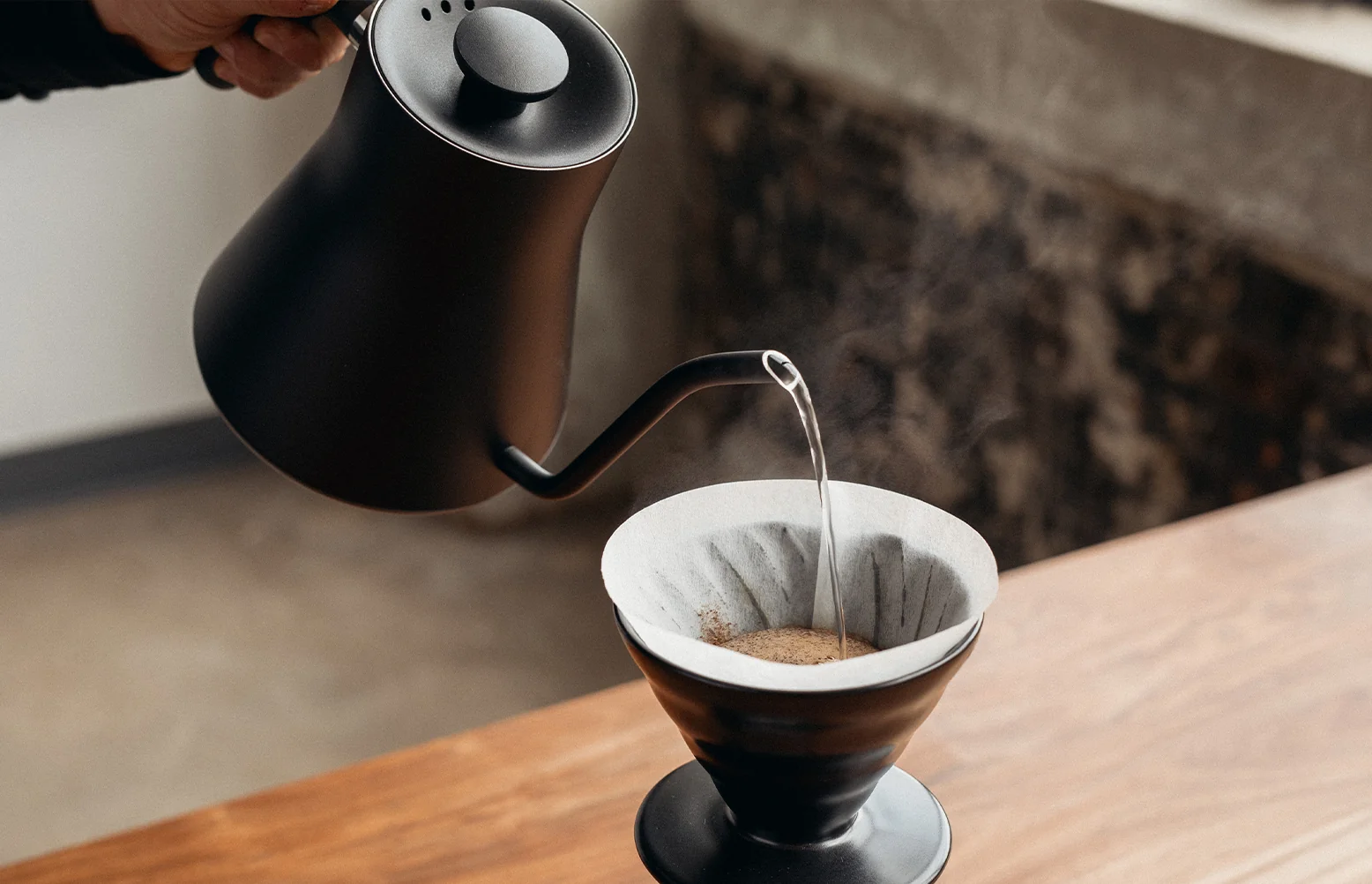
Brewing Better Filter Coffee
Brewing Better Filter Coffee
 Transact Shopping
FOOD & DRINK · GLOBAL
Brewing Better Filter Coffee
The ratio, grind, water and why freshness matters more than equipment
Filter coffee is the method where small changes make the largest difference, and none of them require expensive equipment. Four variables account for almost everything.
Weigh it
A ratio of around 60 grams of coffee per litre of water is the usual starting point, which works out at roughly 1 to 16 or 1 to 17. Scoops are inconsistent because grind size changes the volume.
A set of scales is the single most useful purchase in coffee, well ahead of any brewer.
Grind size and taste
Too coarse and water runs through fast, producing thin sour coffee. Too fine and it stalls, producing bitter harsh coffee. Filter needs something around the texture of coarse sand.
If your coffee tastes sour, grind finer. If it tastes bitter, grind coarser. That single rule solves most problems.
A burr grinder produces consistent particles; a blade grinder produces dust and boulders together, which extract at different rates.
Water matters
Coffee is overwhelmingly water, and very hard or very soft water both produce poor results. A simple filter jug improves the cup noticeably in hard water areas.
Brew just off the boil, around 92 to 96 degrees. Boiling water scorches and produces bitterness.
Freshness
Coffee is best from about three days to a month after roasting. Look for a roast date on the bag rather than a best-before date, which tells you nothing.
Grind immediately before brewing. Ground coffee loses aroma within minutes, which is the largest single difference between a good cup and a dull one.
Storage
Airtight, cool and dark, away from strong smells. Not the fridge, and not the freezer unless sealed in portions and used from frozen.
Single origin and blends
Single origin coffees show the character of one place and vary noticeably between harvests. Blends are built for consistency and for balance with milk.
Roast level matters more than origin for most people — lighter roasts show acidity and fruit, darker roasts show chocolate and body.
Equipment worth buying first
Scales, then a burr grinder, then a kettle you can pour slowly with. The brewer itself is the least important purchase and any decent cone or press works.
Decaf and caffeine
Caffeine has a half-life of around five hours, so a mid-afternoon cup is still in your system at bedtime. Modern decaf processed with water or carbon dioxide is considerably better than it used to be.
Most adult guidance sits around 400 milligrams a day, which is roughly four or five cups.
Technique
Wet the grounds and wait thirty seconds before continuing, which lets carbon dioxide escape and gives even extraction.
WHERE TO BUY
Ready to shop Intelligentsia Coffee? Use the link below to visit the official store.
→ Shop Intelligentsia Coffee — official site
Visit this site