
kids · Articles
Bunk Beds and Children's Bed Safety
Bunk Beds and Children's Bed Safety
 Transact Shopping
FAMILY · GLOBAL
Bunk Beds and Children's Bed Safety
Age limits, guardrails and gaps, ladders and what the standards require
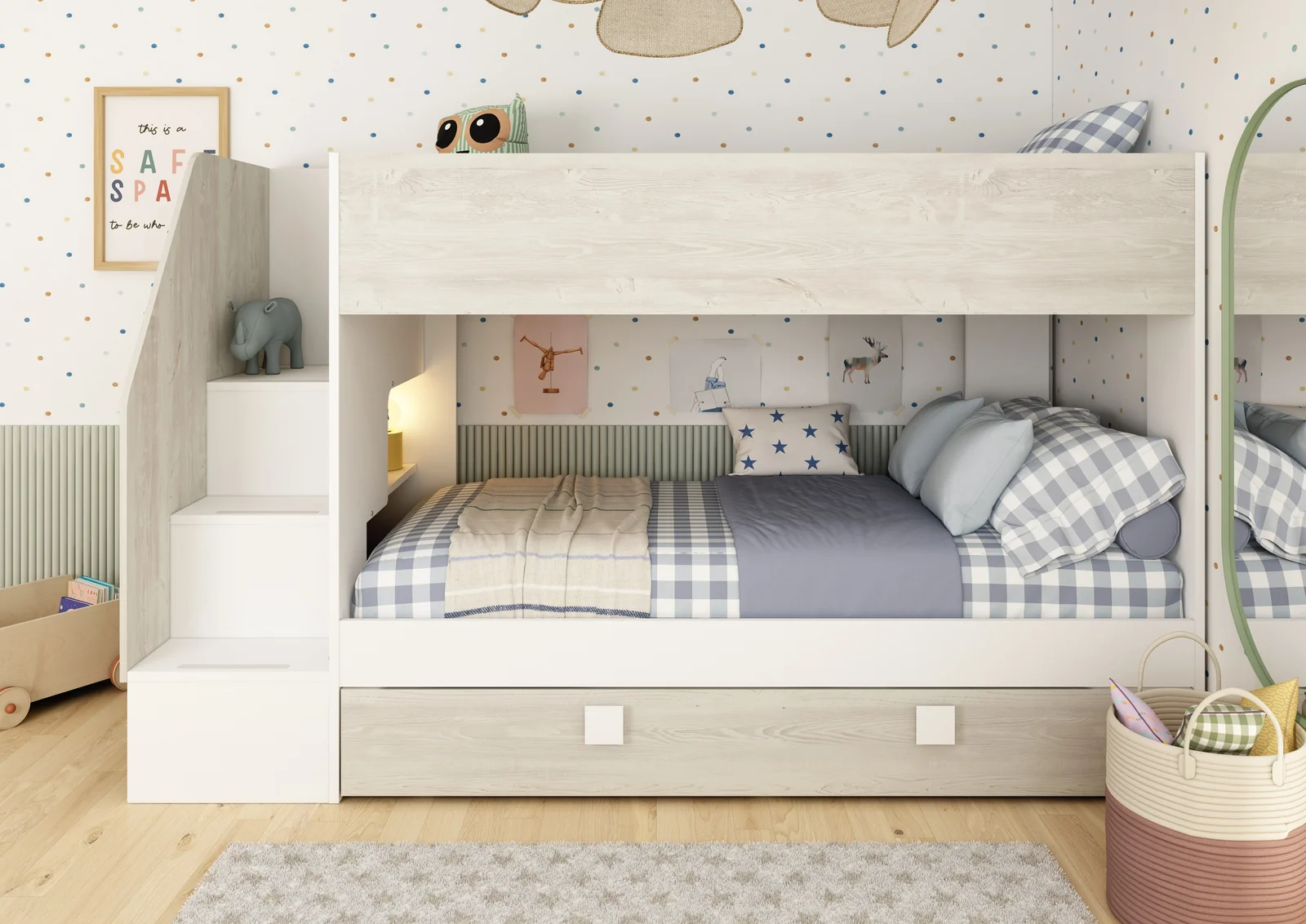
Bunk beds save space and carry specific risks that ordinary beds do not. The safety requirements are well defined, and most injuries involve children who should not have been on the top bunk at all.
Age matters
Safety guidance in the UK, EU and US is consistent that children under six should not sleep on the top bunk. Younger children do not reliably judge the edge or wake safely at height.
That is a clear guideline rather than a suggestion, and it is where most falls come from.
Guardrails and gaps
The top bunk must have guardrails on all sides, including against a wall, and the rail must sit a defined height above the mattress surface — commonly at least 16 centimetres.
Gaps in the structure must be either small enough or large enough that a head cannot become trapped. That is why bunk beds are tested to a specific standard, and why homemade or modified beds are dangerous.
Mattress depth is a safety specification
A mattress thicker than the maximum stated reduces the effective guardrail height. Check the maximum depth the bed specifies and do not exceed it, which is the most commonly ignored instruction.
Ceiling and position
Leave enough headroom for a child to sit up. Keep the bed away from ceiling fans and light fittings, and away from windows and blind cords, which are a strangulation hazard.
The ladder
Fixed and secure rather than hooked on, with a handhold at the top. Teach children to face the ladder going down and keep the floor around it clear.
Rules that matter
No playing on the top bunk, one child at a time, and nothing hung from the frame — ropes, belts and straps have caused strangulation deaths.
Moving from a cot
Most children move to a bed between eighteen months and three years, usually when they start climbing out. A bed guard on an ordinary bed prevents falls during the transition.
Keep the room safe for a child who can now get out — furniture anchored, windows restricted, cords secured, and a stair gate if needed.
Mattresses for children
Firm rather than soft, correctly sized to the frame with no gaps at the sides, and replaced when it dips. Never use a second-hand mattress for a baby.
Buying second-hand
Check the bed is complete with every fixing and that it conforms to the current standard, since older beds may predate the guardrail and gap requirements. Never buy a bunk bed that has been modified.
Ask for the assembly instructions, since these beds cannot be built safely from guesswork.
Assembly and checks
Follow the instructions exactly, use every fixing supplied, and retighten everything every few months.
WHERE TO BUY
Ready to shop Bedz4kids? Use the link below to visit the official store.
→ Shop Bedz4kids — official site
Visit this site