
food · Articles
Eating Well With a Newborn
Eating Well With a Newborn
 Transact Shopping
FAMILY · GLOBAL
Eating Well With a Newborn
Why food gets skipped, what actually helps, breastfeeding needs and accepting help
New parents eat badly for entirely practical reasons, and the effect on energy and mood is real. Most of the fix is about removing decisions rather than about nutrition.
Why it happens
Cooking requires two hands, planning and a predictable window, and a newborn removes all three. Meals become whatever can be eaten standing up, which is usually whatever is nearest.
One-handed food matters
Stock things that can be eaten with one hand and no preparation — oat bars, nuts, cheese, boiled eggs, fruit, yoghurt, sandwiches made in advance. Keep them where you actually sit to feed.
A water bottle within reach of the feeding chair is one of the most useful things in the house, particularly when breastfeeding, which increases thirst noticeably.
Batch cooking before the birth
Freezing meals in single portions during the last weeks of pregnancy is the single most effective preparation. Label everything, since nothing is identifiable frozen.
Soups, stews and pasta sauces reheat well. Anything needing assembly does not.
Nutrition while breastfeeding
Breastfeeding raises energy needs by a few hundred calories a day and increases fluid requirements. Health services in many countries recommend a daily vitamin D supplement for breastfeeding parents and for babies.
Follow your own health service's advice rather than general guidance, particularly on supplements and on alcohol and caffeine.
Accept and direct help
People ask what they can do and mean it. Asking for a specific meal, a supermarket delivery or an hour of holding the baby while you eat is easier for them than a vague offer.
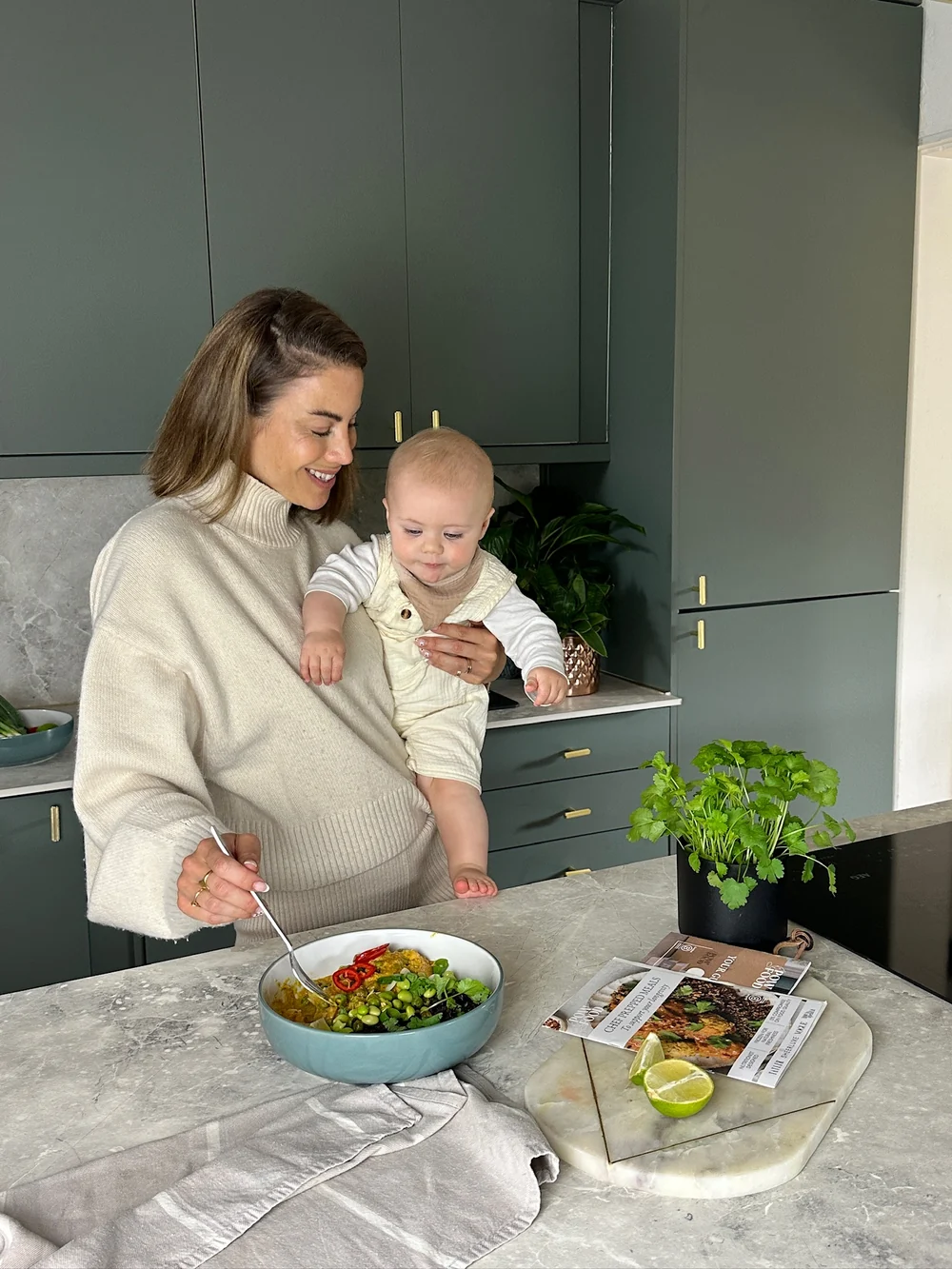
Meal kits and prepared food
These cost more than cooking from a planned shop and less than repeated takeaways and wasted food. For a few weeks after a birth that is a reasonable trade.
Food safety with a newborn
Wash hands before preparing anything, cool leftovers quickly and refrigerate within two hours, and reheat once only until piping hot throughout.
Never give honey to a baby under twelve months, because of the risk of infant botulism.
Eating together later
Once weaning starts, cooking one meal the whole household eats saves enormous effort. Keep salt out of family cooking and add it at the table, since babies should have almost none.
Batch cooking that actually works
Cook double whenever you cook at all and freeze half immediately rather than intending to eat it. Portion into single servings, since a large block is no use to someone holding a baby.
Soups, dals, ragu and curries all freeze and reheat well; anything with a crisp texture does not.
When to speak to someone
Persistent low mood, anxiety or not eating at all are worth raising with a midwife, health visitor or doctor. Postnatal depression is common and treatable.
WHERE TO BUY
Ready to shop NUUDA? Use the link below to visit the official store.
→ Shop NUUDA — official site
Visit this site