
garden · Articles
Supporting and Training Houseplants
Supporting and Training Houseplants
 Transact Shopping
GARDEN · GLOBAL
Supporting and Training Houseplants
When a plant needs support, moss poles and stakes, tying properly and repotting
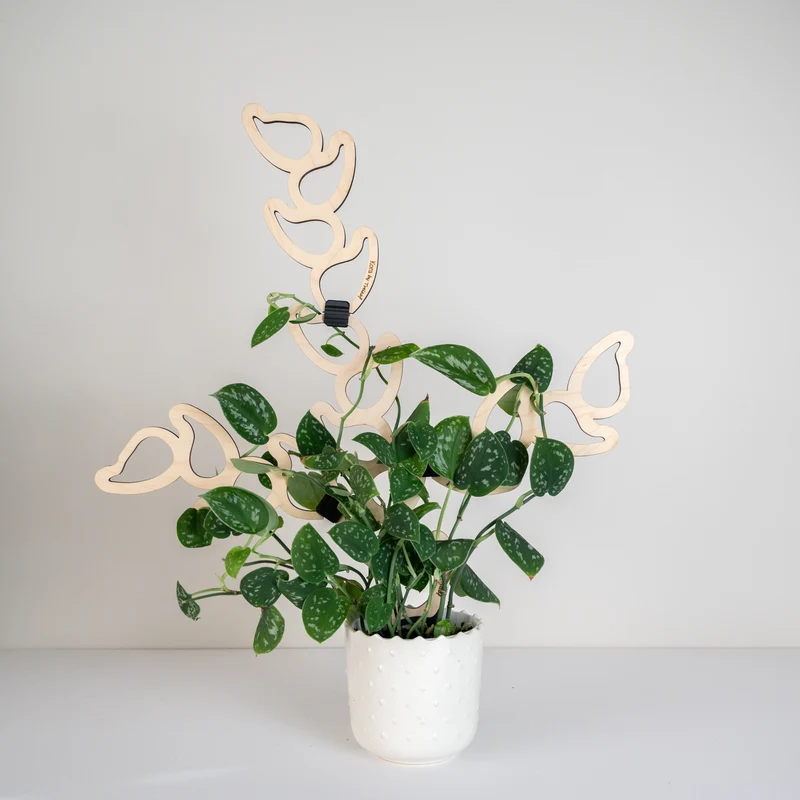
Climbing houseplants grow differently when supported, and the change is more dramatic than most people expect. It is not only about keeping them tidy.
Why support changes growth
Many popular climbers — monstera, philodendron, pothos — are aroids that climb trees in the wild. Given something to attach to, they produce progressively larger leaves and, in monstera, the characteristic splits.
Left trailing, the same plant produces smaller juvenile leaves indefinitely. Support is what unlocks mature growth.
Moss poles and alternatives
A moss pole works because the aerial roots attach to it and take up moisture, which requires keeping the moss damp. A dry pole is just a stake the plant leans on.
Coir poles, bark slabs and trellises all work. For a plant that will be repotted often, a pole that extends is worth choosing over a fixed one.
Attaching without damage
Tie loosely in a figure of eight so the stem is not pinched, using soft ties, plant velcro or strips of old fabric. Wire and cable ties cut into stems as they thicken.
Check ties every few months and loosen them, which is the step everyone forgets.
Aerial roots
Guide them onto the pole rather than cutting them off. They anchor the plant and absorb moisture, and removing them slows the plant down.
Repotting with a pole
Insert the pole at the back of the pot before positioning the plant, since pushing one in later damages roots. Extend rather than replace where possible, since a plant attached to a pole resents being pulled off.
Propagating from a supported plant
Climbers root readily from a cutting with a node and an aerial root. Cut just below a node, root in water or damp moss, and pot on once roots are a few centimetres long.
A plant that has grown up a pole gives far better cuttings than a trailing one.
Pests
Check the undersides of leaves and the junctions of stems regularly for spider mites and mealybug, which spread quickly between plants. Isolate anything new for a few weeks.
Humidity and airflow
Most tropical houseplants prefer higher humidity than a heated room provides. Grouping plants together raises local humidity, and a pebble tray helps a little; misting does very little.
Airflow matters as much, since still damp air encourages fungal problems on leaves.
Light and water
Support does not compensate for poor light. Bright indirect light is what these plants need, and watering when the top few centimetres of compost are dry suits most of them.
Many popular houseplants are toxic to cats and dogs, so check before buying.
WHERE TO BUY
Ready to shop Treleaf? Use the link below to visit the official store.
→ Shop Treleaf — official site
Visit this site