
shoes · Articles
Espadrilles: A Short Guide to Getting Them Right
Espadrilles: A Short Guide to Getting Them Right
 Transact Shopping
FOOTWEAR · UNITED STATES
Espadrilles: A Short Guide to Getting Them Right
Jute soles, sizing and why timing your purchase matters
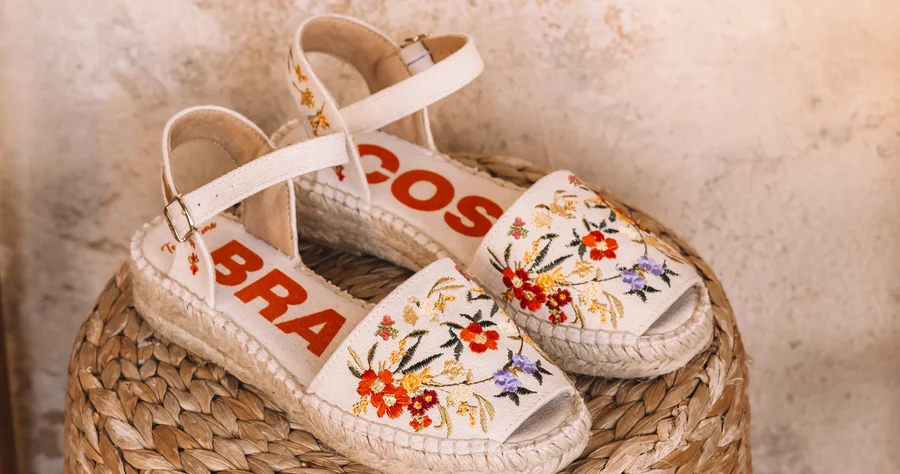
Espadrilles are one of the few genuinely seasonal purchases left in footwear, and they reward understanding what you are actually buying. The traditional construction — a canvas or leather upper stitched to a braided jute sole — has been made in the Spanish Pyrenees for centuries, and the reasons it survives are practical rather than nostalgic.
Why the jute sole matters
Jute is light, breathable and moulds to your foot over the first few wears. That is what makes espadrilles comfortable in heat in a way that rubber-soled shoes are not. It is also why they are not all-weather footwear.
Most modern pairs add a thin rubber outsole beneath the jute, which makes them considerably more practical for pavements and light rain while keeping the comfort. If you intend to actually walk in them rather than wear them on a terrace, look for this.
Wet jute is the one rule
Jute absorbs water and dries slowly, and repeated soaking degrades it permanently. Espadrilles are dry-weather shoes. Accepting that is the whole of espadrille care, and ignoring it is how people conclude they do not last.
If they do get wet, let them dry slowly at room temperature, away from direct heat, and stuff them with paper to hold shape.
Sizing
They generally run true to size but with almost no give across the width, since jute does not stretch the way a leather sole does. Anyone between sizes or with wider feet should size up rather than down.
The canvas upper does soften and mould over the first week, so a snug but not painful fit at purchase is correct. Painful at purchase stays painful.
Traditional construction, briefly
The jute sole is braided into a rope, coiled into shape and stitched rather than glued, which is why properly made espadrilles hold together through a season of wear while cheap imitations separate. The stitching is visible around the edge of the sole and is a reasonable quick quality check.
Vulcanised rubber added beneath the jute is a modern addition and a sensible one for anything other than beach use.
Socks or no socks
Traditionally none, and the canvas handles bare feet well. If you prefer a barrier, invisible trainer socks are the practical compromise — visible socks with espadrilles fight the entire silhouette of the shoe.
Buy in spring
This is a strongly seasonal category. Full size ranges are available in spring and thoroughly picked over by midsummer, with the common sizes disappearing first. Buying early in the season is the difference between choosing a pair and taking what is left.
Wedge and flat versions suit different things — flats for everyday wear, wedges for occasions. Both work best with bare ankles, which is less a style rule than a consequence of how the shoe is constructed.
WHERE TO BUY
Ready to shop Toni Pons? Use the link below to visit the official store.
→ Shop Toni Pons — official site
Visit this site