
bags · Articles
Fleece and Insulated Layers for Outdoor Use
Fleece and Insulated Layers for Outdoor Use
 Transact Shopping
OUTDOORS · GLOBAL
Fleece and Insulated Layers for Outdoor Use
How layering works, fleece weights, synthetic versus down, and care
Staying comfortable outdoors is a question of layering rather than of owning one warm garment. Each layer has a job, and understanding what each does makes buying straightforward.
The three layers
A base layer moves moisture away from the skin. A mid layer traps warm air. A shell blocks wind and water. Cotton has no place in any of them, since it holds moisture and stops insulating when damp.
Fleece weights
Fleece is graded roughly as 100, 200 and 300 weight. The lighter grades breathe well and suit active use; heavier grades are warmer and considerably bulkier under a shell.
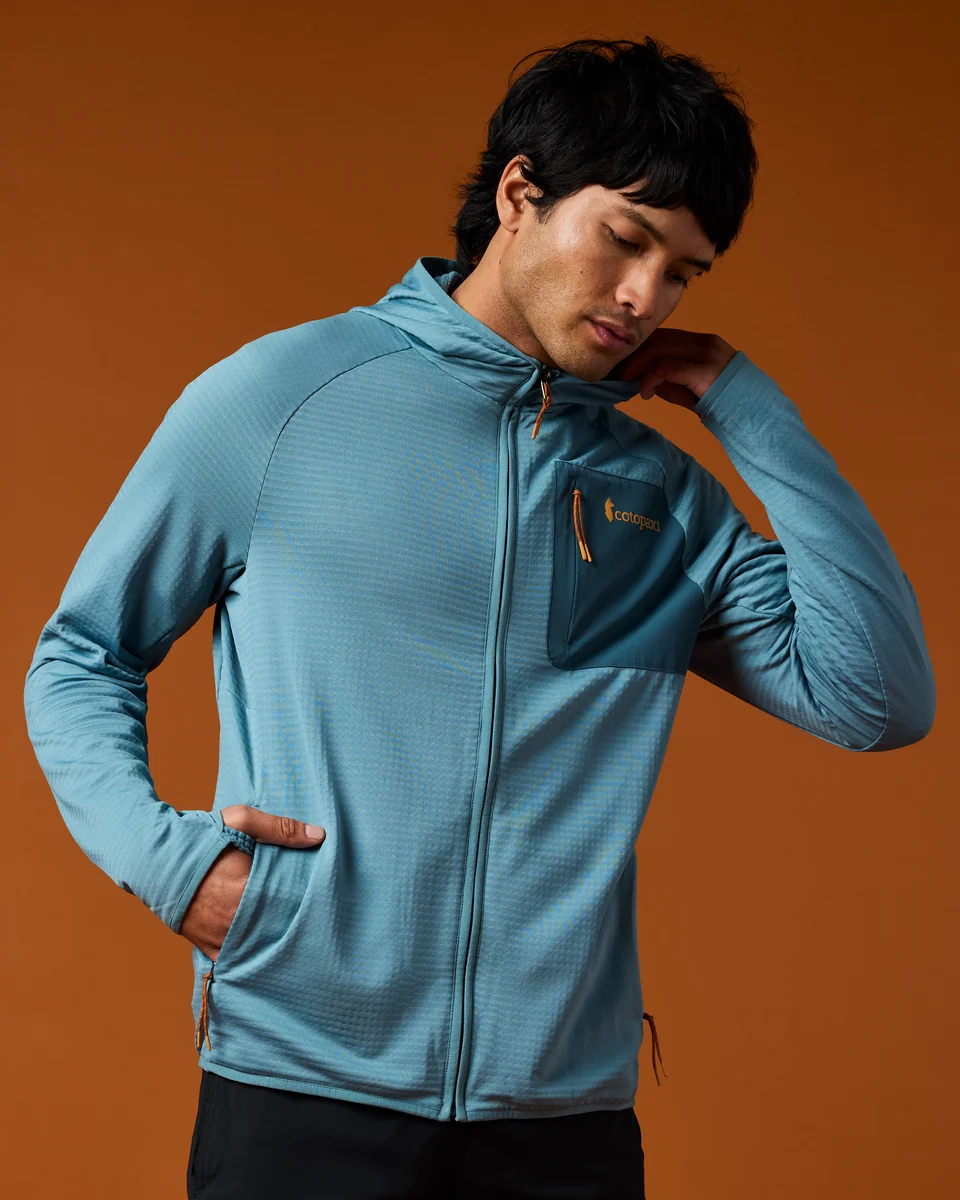
Grid fleece uses a waffle structure that traps air while allowing moisture through, which is why it works well as an active mid layer.
Fleece, synthetic insulation and down
Fleece breathes best and blocks wind least. Synthetic insulation is warmer for its bulk, still insulates when damp and packs down reasonably. Down is warmest for its weight and packs smallest, and loses most of its insulation when wet.
For wet climates and active use, synthetic is the safer choice. For cold dry conditions and packability, down wins.
Fit
A mid layer should fit over a base layer without compressing it, since compressed insulation does not trap air. It should also fit under a shell without restricting movement.
Check sleeve length with arms raised and that the hem covers you when bending forward.
Fleece sheds microfibres
Synthetic fleece releases microplastic fibres in the wash. Washing less often, using a filter bag and choosing recycled or longer-lasting fabrics all reduce it.
Sizing across layers
Try a mid layer over the base layer you actually wear, and a shell over both, rather than each on its own in a warm shop. A jacket that fits perfectly alone will be restrictive over a fleece.
Check arm length with arms raised, since sleeves ride up when reaching.
Repair rather than replace
Many outdoor brands offer repairs, and a small tear patched costs a fraction of a new garment. Keeping a jacket for a decade does more environmentally than any fabric choice.
Buying off-season
Outdoor clothing is cheapest at the end of a season and most expensive at the start. Nothing about the garment changes in between, which makes it the largest saving available in this category.
Care
Wash fleece cool and skip fabric softener entirely, which coats the fibres and destroys breathability. Do not tumble dry on heat, which melts and mats the pile.
For down, use a specialist detergent and tumble dry low with dryer balls, which restores loft.
WHERE TO BUY
Ready to shop Cotopaxi? Use the link below to visit the official store.
→ Shop Cotopaxi — official site
Visit this site