
home · Articles
Home Water Filtration: What Each Type Removes
Home Water Filtration: What Each Type Removes
 Transact Shopping
HOME · GLOBAL
Home Water Filtration: What Each Type Removes
Carbon, reverse osmosis and softeners, what is in tap water, and maintenance
Water filters are sold as a single category and remove very different things. Choosing one starts with knowing what you actually want removed.
Find out what is in your water
Suppliers publish annual water quality reports for each area, free and detailed. Read yours before buying anything, since it tells you the hardness, the chlorine treatment and any local issue.
In most developed countries mains water is safe to drink. Filtration is generally about taste, hardness or a specific concern rather than safety.
Activated carbon
The most common type, in jugs and under-sink cartridges. It removes chlorine taste and odour and some organic compounds, and it does not remove hardness, nitrates or most dissolved minerals.
This is what most people actually want, since chlorine taste is the usual complaint.
Reverse osmosis
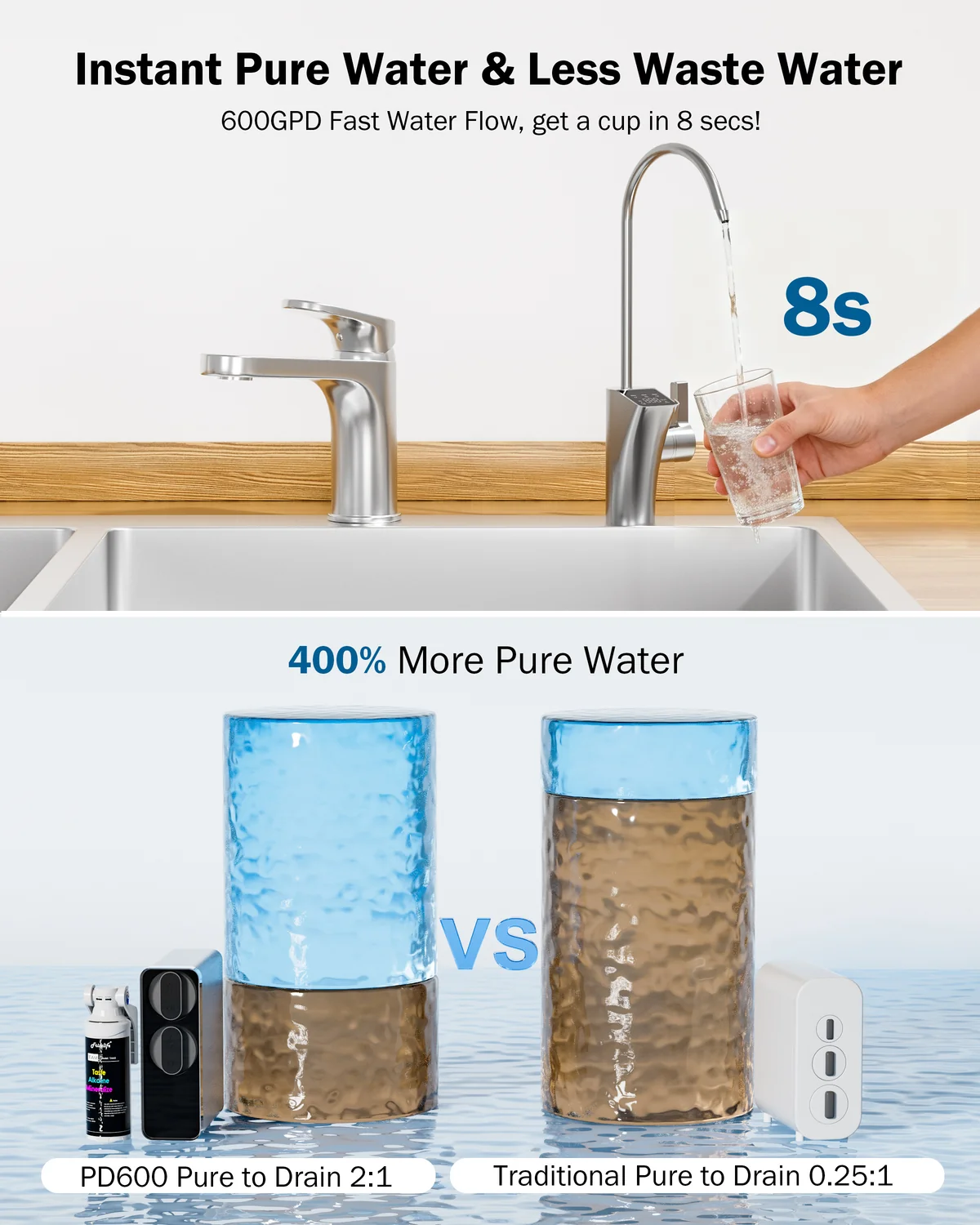
Forces water through a membrane and removes the widest range of contaminants including dissolved solids, nitrates and heavy metals. It also removes beneficial minerals, wastes water in the process and needs a tank and drain connection.
Worth it for a specific known problem rather than as a default.
Softeners are not filters
An ion exchange softener removes calcium and magnesium to stop limescale, and it adds sodium. It does not make water cleaner, and softened water is generally not recommended for drinking or for making up infant formula.
Keep one tap unsoftened for drinking.
Maintenance is the safety issue
A filter left beyond its life becomes a bacterial surface and can make water worse. Change cartridges on schedule rather than when taste changes.
Jug filters should be kept in the fridge and emptied if unused for days.
Filter bottles and jugs
Jug filters are cheap, need no plumbing and have a short cartridge life. Under-sink systems cost more, filter more and need a plumber or reasonable DIY confidence.
Whichever you use, keep filtered water refrigerated and drink it within a day or two, since removing chlorine also removes what was suppressing bacterial growth.
Taste
If the complaint is taste alone, a simple carbon filter or simply chilling tap water in a covered jug solves it for almost nothing.
Installation
Under-sink systems need a connection to the cold supply and, for reverse osmosis, a drain connection. Check whether a separate tap is required and whether your worktop can be drilled.
Isolate the supply before starting and check for leaks over the following days, since slow leaks under a sink cause a great deal of damage before being noticed.
Certification
Look for independent certification against a recognised standard for the specific contaminant claimed, rather than a general claim about purity.
WHERE TO BUY
Ready to shop Frizzlife? Use the link below to visit the official store.
→ Shop Frizzlife — official site
Visit this site